Lucy Kemp Welch
Working Horse
Working Horse
Couldn't load pickup availability
 Date Created Early 20th Century
 Size with Frame Height: 27 in (68.58 cm)Width: 24 in (60.96 cm)Depth: 2.5 in (6.35 cm)


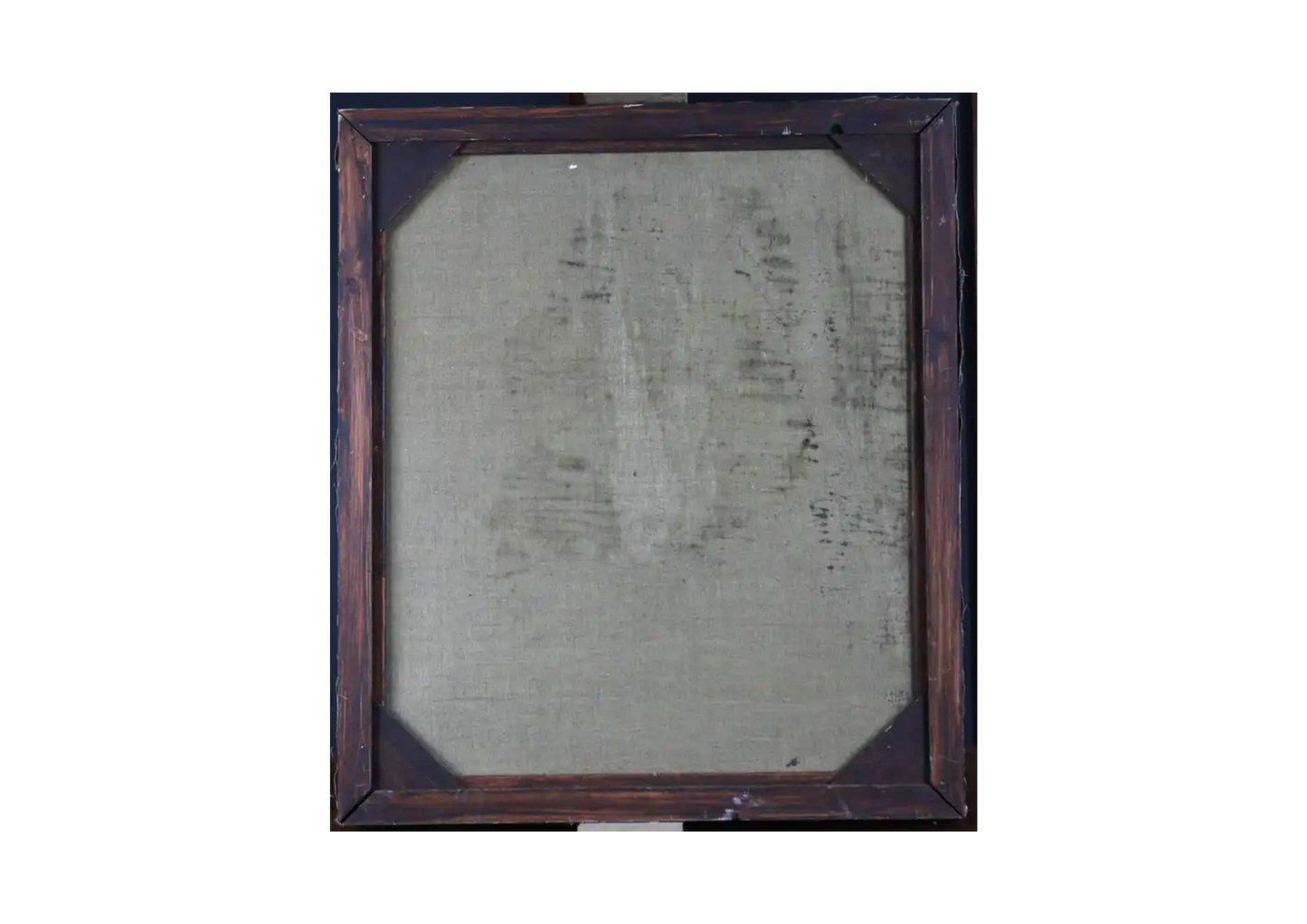
Lucy Kemp Welch 1869-1958 was an English artist and teacher who specialised in the painting of horses. From the 1890''s until the 1920's she was the most famous painter of horses in the UK, producing art of war and working horses during the first World War. She studied art at Hubert Von Herkomer's School which she later took over the running of the school as the best female artist, the school changed names to the Bushey ( Hertfordshire ) School where she continued to teach the painting of animals. This horse portrait is a working horse and either one that pulled farm machinery or gun carriages during WW1, it is known as a working horse whichever line of activity in which it was engaged . This picture was catalogued as unsigned but was catalogued as a definite work of Lucy Kemp Welch by the former head of pictures at Bonhams London. During the career of Lucy Kemp Welch she exhibited over 60 times at the Royal Academy, her works are in several major collections, the Tate Gallery, the Bushey Museum and the Imperial War Museum London. After the war she continued to draw and paint equestrian subjects, during the summer months she would attend Sangers Circus where the horses were displayed in a variety of events as entertainment for the public. This painting is unsigned as stated above. I have included a further scholarly biography for your interest. Lucy Kemp-Welch was one of the most accomplished British animal painters of the late nineteenth and early twentieth centuries, renowned in particular for her authoritative depictions of horses and working animals. Born in Bournemouth in 1869, she was the daughter of the marine painter Thomas Kemp-Welch (1839–1912), from whom she inherited both technical instruction and a disciplined approach to draughtsmanship. Her early exposure to professional artistic practice proved formative, and from the outset she demonstrated an unusual aptitude for equine anatomy and movement. Kemp-Welch received her formal training at the Royal Academy Schools in London, where she studied from 1895. At the Royal Academy she was taught by, among others, John Singer Sargent and Sir George Clausen, and she quickly distinguished herself through her mastery of drawing and compositional structure. In 1898 she won the Turner Gold Medal, the Academy’s most prestigious student award, for a painting of horses at work—an early indication of the subject matter that would define her career. This achievement placed her among the most highly regarded artists of her generation and was particularly notable given the institutional barriers faced by women artists at the time. Throughout her career, Kemp-Welch remained committed to realism grounded in close observation. Her paintings are characterised by a robust handling of paint, a restrained but earthy palette, and an acute sensitivity to weight, musculature, and movement. She frequently depicted horses in agricultural or military contexts—plough teams, artillery horses, and draught animals—subjects that aligned her work with the broader British realist tradition and distinguished it from the more sentimental animal painting popular with Victorian audiences. Her approach owes much to French realist precedents, particularly the work of Rosa Bonheur, yet Kemp-Welch’s vision is marked by a distinctly British sense of stoicism and restraint. During the First World War, Kemp-Welch was commissioned by the Imperial War Museum to record the role of horses in the conflict. Her war paintings, including scenes of artillery horses and transport animals, are notable for their lack of overt heroics; instead, they emphasise endurance, labour, and the often-overlooked suffering of animals in wartime. These works form an important contribution to British war art, expanding its scope beyond the human experience of conflict and reinforcing her reputation as the pre-eminent painter of horses in her era. Kemp-Welch exhibited regularly at the Royal Academy from 1899 onwards and also showed work at the Paris Salon and other international venues. Despite her professional success, her reputation declined in the mid-twentieth century as tastes shifted away from realism and traditional subject matter. In recent decades, however, her work has been reassessed within the context of women’s artistic practice and British realism, and she is now recognised as a significant figure who combined technical excellence with a serious, unsentimental vision. Lucy Kemp-Welch died in 1958. Her paintings are held in numerous public collections, including the Tate, the Imperial War Museum, and regional museums throughout the United Kingdom. Today, she is regarded as one of the foremost animal painters of her generation and an artist whose work offers a compelling insight into the social, agricultural, and military history of Britain at the turn of the twentieth century.